5 Lessons From a Grandmaster Marvel Rivals Player Who Blamed His Teammates
You can order the same kind of articles for your own video to boost it on YouTube and Google. Just message the Telegram bot @sat_sit_bot. Articles with your video embedded are written and posted by the bot itself — on popular topical sites (no ads). Free trial — 50 articles.
· based on the channel Flats
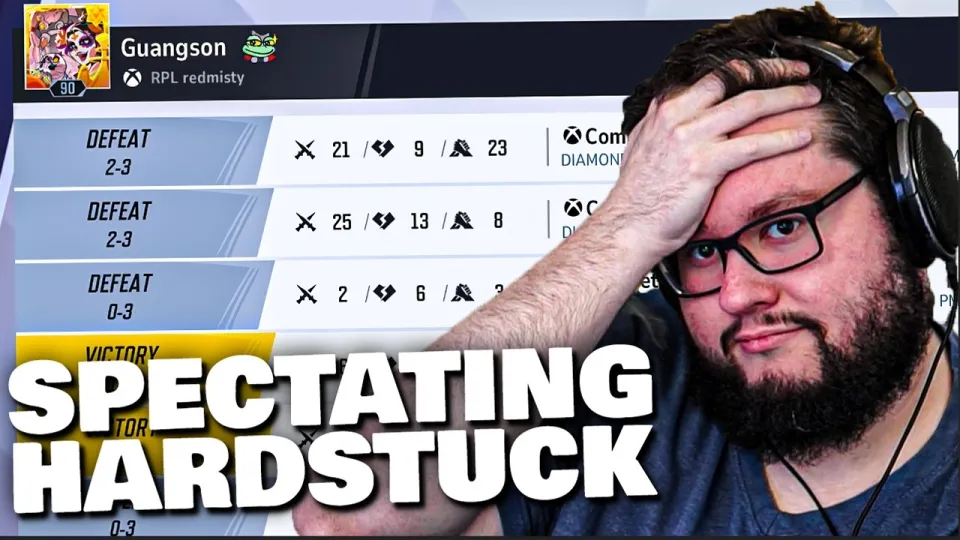
Marvel Rivals is a team game, but the fastest way to stay stuck is to blame the team. In a Flats stream breakdown, a Grandmaster-ranked player insisted his teammates were holding him back, then spent an entire match demonstrating the habits that actually keep players in place: a one-button hero pick, no accountability and a fundamental misunderstanding of how support value is created. The lesson is not about one player — it is a checklist anyone can run against their own gameplay, and you can watch Flats live on his Twitch channel to see the same reviews happen in real time.
What the Marvel Rivals hardstuck case actually showed
The core problem was not aim or mechanics; it was a rigid, low-impact hero strategy defended as correct. The player locked Cloak & Dagger and essentially played Dagger only — holding the healing side of the kit and treating the Cloak half as an emergency button rather than a core tool. In Marvel Rivals, Cloak & Dagger is a two-in-one support: Dagger provides sustained healing, a healing wall and a light-burst blind, while Cloak brings a damage-over-time beam, a phase that makes allies untargetable and a dark-force blind that can swing a fight. Ignoring half of that kit means giving up the playmaking half of the character.
Two other details stood out. First, the player walked straight past a health pack while visibly searching for a health pack — a small moment that says a lot about how much of the map the player is actually reading. Second, when pressed, the player framed himself as a Spider-Man main, which explained the instinct to look for excuses rather than adjustments. Duelist mains who flex onto support often keep a damage-first mindset and never learn the support win conditions.
Five habits that keep Marvel Rivals players hardstuck
These are the recurring patterns from the session, turned into a self-audit you can run after your next ranked match.
- Playing half a hero. If your pick has two forms or two modes, you are leaving value on the table. Cloak & Dagger players who never swap are effectively running a weaker healer with no blind and no escape utility for the team.
- Blaming the lobby before reviewing the replay. The player opened with the claim that teammates were the problem, which shuts down learning immediately. Watch your own deaths first.
- Ignoring the map. Missing a health pack that is in plain sight is a symptom: you are tracking the fight, not the space around it. Health packs are free resources that decide duels.
- Ego over evidence. Confidence is fine, but a negative win rate at a high rank is data. If you climb while losing more than you win, the system is carrying you, not your skill.
- Never swapping. Marvel Rivals rewards adaptation. A support who refuses to change hero when the enemy runs dive or double sniper is choosing to lose the draft.
Why a negative win rate can still reach Grandmaster
Rank inflation is the uncomfortable truth behind many “I am stuck” stories. Marvel Rivals, like most modern ranked ladders, awards points for performance and protects players from steep losses at certain thresholds, so a player can grind to Grandmaster with a win rate under 50% simply by playing enough games. That does not mean the rank is meaningless — it means the rank is not proof of improvement.
The practical test is simple: check your last 20 matches. If your win rate is negative and your rank is rising, you are being moved up by volume, not by skill. The fix is not more games; it is fewer games with deliberate review, one hero pool of two to three characters, and a written note after each loss about the first mistake you made.
The support mindset: how to actually carry on Cloak & Dagger
Support carry in Marvel Rivals comes from uptime and decision quality, not from healing numbers. A few habits separate a Grandmaster-level Cloak & Dagger from a passenger:
- Swap to Cloak for the blind, not just the escape. A well-timed dark-force blind on a diving duelist removes their damage window and often wins the fight outright.
- Use Dagger's healing wall on chokepoints before the fight starts, not after your tank is already low.
- Track your ultimate timing against enemy ultimates. Cloak & Dagger's ultimate is one of the strongest defensive tools in the game when it is not wasted.
- Position behind cover with a retreat line. If you die first, the team fight is over regardless of your healing output.
- Call your swaps. A support who says “I am going Cloak, push now” turns a personal cooldown into a team play.
Typical viewer questions about Marvel Rivals ranked
The reaction to the breakdown split into two camps: players furious that this was a Grandmaster lobby, and players who recognised the behaviour from their own matches. The most common doubts were about whether teammates really can hold you back (they can, but not in the way the player claimed), whether a high rank means anything on its own (it does not), and whether the “no damage Rocket” style of support is viable (it is a niche, not a default). The recurring theme is ego: players arrive with a fixed story about why they lose and never test it against the replay.
There is also a fairness point worth stating plainly. Being publicly reviewed is humiliating, and a name change usually follows. But the alternative — staying convinced that the lobby is the problem — costs far more rank over a season than one embarrassing session.
Where to watch Flats and his Marvel Rivals breakdowns
Flats streams Marvel Rivals and Overwatch reviews, spectates players who ask for help, and breaks down exactly what went wrong in each match. Everything he does lives in one place:
- Twitch (live streams): https://www.twitch.tv/flats
- Discord community: https://discord.gg/flats
- Twitter/X: https://twitter.com/Flats_Ow
- TikTok: https://www.tiktok.com/@flats_ow
- Facebook: https://www.facebook.com/FlatsTTV
Final thoughts on the Marvel Rivals hardstuck myth
The player in this breakdown proved that teammates can hold you back — just not in the way he intended. His own habits, from playing half of Cloak & Dagger to ignoring a health pack in plain sight, did more damage than any lobby ever could. Rank is a snapshot of games played, not a certificate of skill, and a negative win rate at Grandmaster is the clearest evidence of that. If you recognise any of the five habits above in your own play, you already have your next training goal. The full breakdown comes from Flats, whose spectate reviews are the fastest way to see these mistakes from the outside — catch him live on Twitch and test your own gameplay against the same checklist.
Key takeaways
- The spectated player was in Grandmaster rank in Marvel Rivals and insisted his teammates were the reason he could not climb.
- He played Cloak & Dagger as a Dagger-only healer, rarely swapping to Cloak for the blind and damage window.
- He walked past a health pack while looking for a health pack, a moment the streamer highlighted without comment.
- He described himself as a former Spider-Man main and took no accountability for his own gameplay.
- His account showed a negative win rate even though he had climbed to Grandmaster, which viewers called out as free climbing.
Source: I Spectated Someone Who Claimed To Be Hardstuck In Marvel Rivals · Markdown version
Questions & answers
Can teammates really hold you back in Marvel Rivals ranked?
Yes, but far less often than players claim. Over a large sample of games, your team averages out and your own decisions become the constant. The player in this breakdown blamed his team while ignoring his own hero usage, positioning and map awareness, which is the usual pattern behind a hardstuck claim.
Does a high rank like Grandmaster mean a player is good at Marvel Rivals?
Not automatically. Ranked systems reward volume and performance points, so a player can reach Grandmaster with a win rate below 50% by playing many games. Rank shows how much you have played and roughly where you sit, not how well you understand the game.
Is Cloak & Dagger supposed to be played as Dagger only?
No. The character is designed around swapping between the two forms: Dagger for sustained healing and the healing wall, Cloak for the damage beam, the phase that protects allies and the blind. Sticking to Dagger only removes the playmaking half of the kit and lowers your impact in team fights.
What should a stuck Marvel Rivals support player change first?
Start with two things: a hero pool of two to three characters you can swap between, and a short review of your last 20 matches focused on your first death in each game. Add map awareness — health packs and cover — and stop measuring yourself by healing numbers alone.